


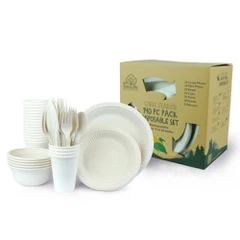
Are disposable utensil packs resistant to bending?
Nov 06, 2026
Leave a message
In the fast-paced world of today, disposable utensil packs have become an indispensable part of our daily lives. From picnics in the park, busy office lunches, to large-scale events, these convenient items offer a practical solution for those on the go. As a leading supplier of disposable utensil packs, I have witnessed firsthand the growing demand for products that are not only convenient but also durable. A crucial aspect of durability in disposable utensils is their resistance to bending. This blog post aims to explore this property in depth, examining the factors that influence it and the importance it holds for both consumers and businesses.
Understanding the Bending Resistance of Disposable Utensil Packs
When we talk about the bending resistance of disposable utensils, we are essentially looking at how well they can maintain their shape under pressure. A utensil that easily bends or breaks can be a major inconvenience. For instance, a fork that bends while trying to spear a piece of food or a spoon that collapses when scooping up soup can quickly ruin the dining experience. Therefore, ensuring that our disposable utensil packs are resistant to bending is a top priority for us.
The bending resistance of disposable utensils is influenced by several factors, including the material used, the manufacturing process, and the design. Let's take a closer look at each of these aspects.
Materials Matter
The choice of material is perhaps the most significant factor affecting the bending resistance of disposable utensil packs. Different materials have distinct mechanical properties, which determine how well they can withstand bending forces.
Plastic Utensils
Plastic is one of the most commonly used materials for disposable utensils. It is lightweight, cost - effective, and easy to manufacture. However, not all plastics are created equal when it comes to bending resistance.


Some high - quality plastics, such as polypropylene, offer good resistance to bending. Polypropylene is a thermoplastic polymer that has a relatively high stiffness and toughness. Utensils made from polypropylene can withstand a certain amount of force without bending easily. On the other hand, lower - grade plastics may be more prone to bending as they have weaker molecular structures.
If you are looking for reliable plastic cutlery, our Individually Wrapped Plastic Cutlery Sets are a great choice. They are made from high - quality plastics that ensure good bending resistance, making them suitable for a variety of food items.
Bamboo Utensils
Bamboo has gained popularity in recent years as an eco - friendly alternative to plastic. It is a renewable resource and has a natural aesthetic appeal. Bamboo utensils also have decent bending resistance, thanks to the natural fiber structure of bamboo.
The fibers in bamboo run parallel to each other, providing strength and resilience. When a force is applied to a bamboo utensil, these fibers work together to distribute the load, reducing the likelihood of bending. Our Disposable Bamboo Cutlery Set is crafted from high - quality bamboo, ensuring that it can handle normal use without bending easily.
Other Materials
In addition to plastic and bamboo, there are other materials used in disposable utensil packs, such as paper and wood. Paper utensils are generally less resistant to bending compared to plastic and bamboo. They are more suitable for light - weight food items and short - term use. Wood utensils, similar to bamboo, have a certain level of bending resistance due to their natural structure. However, their quality can vary depending on the type of wood and the treatment it has undergone.
The Role of Manufacturing Process
The manufacturing process also plays a crucial role in determining the bending resistance of disposable utensils. A well - executed manufacturing process can enhance the mechanical properties of the materials used.
For plastic utensils, the injection molding process is commonly used. During injection molding, the plastic is melted and injected into a mold cavity under high pressure. The pressure and temperature during this process need to be carefully controlled to ensure that the utensils have the right density and structure. If the pressure is too low or the temperature is not optimal, the plastic may not fill the mold properly, resulting in weak spots in the utensil that are more likely to bend.
In the case of bamboo utensils, the manufacturing process involves cutting, shaping, and finishing the bamboo. Proper treatment, such as drying and coating, can improve the strength and durability of the bamboo, thereby enhancing its bending resistance.
Design Considerations
The design of disposable utensils can significantly affect their bending resistance. For example, the thickness of the utensil is an important factor. A thicker utensil is generally more resistant to bending than a thinner one. However, increasing the thickness also means using more material, which can increase the cost and make the utensil heavier.
The shape of the utensil also matters. Forks, spoons, and knives have different stress distribution patterns when in use. A well - designed fork, for instance, will have tines that are thick enough to withstand the force of piercing food without bending, while the handle is made in a way that provides a comfortable grip and resists bending under normal handling.
Our Disposable Utensils Set is designed with these factors in mind. We carefully balance the thickness, shape, and overall design of each utensil to ensure optimal bending resistance while keeping the cost and weight in check.
Importance of Bending Resistance for Consumers and Businesses
For consumers, bending - resistant disposable utensils mean a better dining experience. They can enjoy their food without the frustration of dealing with utensils that bend or break easily. This is especially important for foods that require more force to cut, scoop, or spear, such as steak, thick soups, or dense desserts.
From a business perspective, providing high - quality, bending - resistant disposable utensil packs can enhance customer satisfaction and loyalty. Restaurants, cafes, and event organizers that offer reliable disposable utensils are more likely to receive positive feedback from their customers. Moreover, it can also help in reducing costs associated with the replacement of damaged utensils.
Contact Us for Your Disposable Utensil Needs
As a supplier committed to providing top - quality disposable utensil packs, we understand the importance of bending resistance. Our products are carefully crafted using the best materials and manufacturing processes to ensure excellent performance.
If you are interested in purchasing our disposable utensil packs, we would be more than happy to discuss your specific requirements. Whether you are a small business looking for a cost - effective solution or a large event planner in need of bulk supplies, we have the right products for you.
References
- Ashby, M. F., & Jones, D. R. H. (2012). Engineering Materials 1: An Introduction to Properties, Applications and Design. Butterworth - Heinemann.
- Callister, W. D., & Rethwisch, D. G. (2010). Materials Science and Engineering: An Introduction. Wiley.
- Mohanty, A., Misra, M., & Drzal, L. T. (Eds.). (2005). Natural Fibers, Biopolymers, and Biocomposites. CRC Press.
Send Inquiry