


Are there any eco friendly forks made from flax fibers?
Aug 19, 2025
Leave a message
Hey there! As an eco - friendly forks supplier, I often get asked if there are any eco - friendly forks made from flax fibers. Well, let's dig into this topic and find out!
First off, flax fibers are pretty amazing. Flax, also known as linseed, is a plant that has been used by humans for thousands of years. It's mainly grown for its seeds, which can be used to make oil, but the fibers from the plant are also super useful. These fibers are strong, flexible, and have natural antibacterial properties.
So, can we make forks out of them? The answer is yes! Making forks from flax fibers is not only possible but also a great eco - friendly alternative to traditional plastic or metal forks.
Let's talk about why flax fiber forks are eco - friendly. To begin with, flax is a renewable resource. Unlike fossil fuels used to make plastic, flax can be grown year after year. It doesn't take a long time to grow either. Flax plants reach maturity in about 90 to 120 days. This means we can keep producing flax fiber forks without depleting the earth's resources.
Another big plus is that flax fiber forks are biodegradable. When you're done using them, you can simply toss them in a compost bin. Over time, they'll break down into natural elements and return to the soil. This is a huge contrast to plastic forks, which can take hundreds of years to decompose and often end up polluting our oceans and landfills.
In terms of production, making forks from flax fibers is relatively energy - efficient. The process involves harvesting the flax plants, separating the fibers, and then shaping them into forks. Compared to the energy - intensive processes of mining and refining metals for metal forks or the chemical - heavy processes of making plastic forks, flax fiber fork production has a much lower carbon footprint.
Now, let's look at the practical side of using flax fiber forks. You might be wondering if they're strong enough to hold up during a meal. Well, these forks are surprisingly sturdy. The natural strength of flax fibers allows them to withstand normal eating pressure. They're not going to break or bend easily when you're cutting through a piece of steak or scooping up some mashed potatoes.
They also have a nice, natural look and feel. The texture of the flax fibers gives the forks a rustic charm that you won't find with plastic or metal ones. It's like bringing a bit of nature to your dining table.
As an eco - friendly forks supplier, I'm really excited about the potential of flax fiber forks. We're constantly looking for ways to improve the production process and make these forks even better. For example, we're exploring different finishes to make them more water - resistant without sacrificing their eco - friendliness.


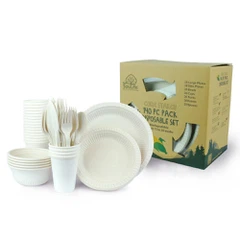
If you're in the market for eco - friendly disposable cutlery, we have some great options. Check out our Wrapped Disposable Silverware. These come neatly wrapped and are perfect for events or takeaways. We also have Compostable Spoons and Forks that are made with high - quality materials, including flax fibers in some of our products. And if you're running a takeaway business, our Takeaway Cutlery is a great choice. It's durable, eco - friendly, and won't break the bank.
When it comes to the market for eco - friendly forks, there's definitely a growing demand. More and more consumers are becoming aware of the environmental impact of single - use plastics and are looking for sustainable alternatives. Restaurants, cafes, and event planners are also jumping on the bandwagon. They want to offer their customers a more eco - conscious dining experience.
However, there are still some challenges in the production and distribution of flax fiber forks. One of the main issues is cost. Currently, producing flax fiber forks can be a bit more expensive than making plastic forks. This is mainly due to the relatively small - scale production and the cost of sourcing high - quality flax fibers. But as the demand increases and the production process becomes more efficient, we expect the prices to come down.
Another challenge is consumer awareness. Some people might not be familiar with flax fiber forks and might be hesitant to try them. That's why we're working hard to educate consumers about the benefits of these forks. We believe that once people give them a try, they'll see how great they are and will keep coming back for more.
In conclusion, there are definitely eco - friendly forks made from flax fibers, and they have a lot going for them. They're renewable, biodegradable, energy - efficient, and practical. As an eco - friendly forks supplier, I'm confident that the future of flax fiber forks is bright.
If you're interested in purchasing our eco - friendly forks, whether it's for your restaurant, catering business, or just for personal use, we'd love to hear from you. We can offer you competitive prices, high - quality products, and excellent customer service. Just reach out to us, and we can start a conversation about your specific needs. Let's work together to make the world a greener place, one fork at a time!
References
- "Flax: A Versatile Crop" - Agricultural Research Journal
- "Biodegradable Materials for Disposable Cutlery" - Environmental Science Magazine
- "Renewable Resources in the Food Service Industry" - Food Service Trends Report
Send Inquiry