


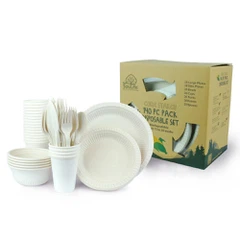
Are there any eco friendly forks made from recycled cardboard?
Oct 02, 2025
Leave a message
In today's environmentally conscious world, the demand for eco-friendly alternatives to traditional single-use items is on the rise. One such item that has gained significant attention is the humble fork. As an eco-friendly forks supplier, I'm often asked about the possibility of forks made from recycled cardboard. In this blog post, I'll explore this topic in depth, discussing the feasibility, benefits, and challenges of using recycled cardboard to create eco-friendly forks.
The Need for Eco-Friendly Forks
Before delving into the specifics of recycled cardboard forks, it's important to understand why there's such a push for eco-friendly cutlery in the first place. Traditional plastic forks are a major contributor to environmental pollution. They are made from non-renewable resources, such as petroleum, and take hundreds of years to decompose in landfills. Additionally, plastic forks often end up in our oceans, where they pose a serious threat to marine life.
In contrast, eco-friendly forks are designed to have a minimal impact on the environment. They are typically made from renewable or recycled materials and are either biodegradable or compostable. By choosing eco-friendly forks, consumers can reduce their carbon footprint and help protect the planet for future generations.
Can Recycled Cardboard Be Used to Make Forks?
The short answer is yes, it is possible to make forks from recycled cardboard. Cardboard is a versatile material that can be molded and shaped into various forms. However, there are several challenges that need to be addressed when using recycled cardboard to create forks.
One of the main challenges is durability. Cardboard is not as strong as traditional plastic or metal, so forks made from recycled cardboard may not be as sturdy or long-lasting. This can be a problem, especially for applications where the forks need to be used for cutting or piercing food.
Another challenge is moisture resistance. Cardboard is prone to getting wet and losing its shape, which can make it unsuitable for use with moist or greasy foods. To overcome this issue, the cardboard forks may need to be coated with a waterproof or grease-resistant material, which can add to the cost and complexity of the manufacturing process.
Despite these challenges, there are companies that have successfully developed eco-friendly forks made from recycled cardboard. These forks are typically designed to be lightweight, disposable, and suitable for a variety of food service applications. They are often used in events, parties, and takeout restaurants, where single-use cutlery is common.
Benefits of Recycled Cardboard Forks
There are several benefits to using recycled cardboard forks. Firstly, they are made from a renewable and recyclable material, which means they have a lower environmental impact compared to traditional plastic forks. By using recycled cardboard, we can reduce the demand for virgin materials and help conserve natural resources.
Secondly, recycled cardboard forks are biodegradable and compostable. This means that they can break down naturally in the environment, without leaving behind any harmful pollutants or microplastics. When disposed of properly, they can contribute to the creation of nutrient-rich soil, which can be used to grow plants and crops.


Thirdly, recycled cardboard forks are often more affordable than other eco-friendly alternatives, such as bamboo or wooden forks. This makes them a cost-effective option for businesses and consumers who are looking to reduce their environmental impact without breaking the bank.
Other Eco-Friendly Fork Options
While recycled cardboard forks are a viable option, there are also other eco-friendly fork alternatives available on the market. Some of these options include:
- Bamboo Forks: Bamboo is a fast-growing and renewable resource that can be used to make durable and eco-friendly forks. Bamboo forks are biodegradable and compostable, and they have a natural, rustic look that is popular with consumers.
- Wooden Forks: Wooden forks are another popular eco-friendly option. They are made from sustainable wood sources, such as birch or maple, and they are biodegradable and compostable. Wooden forks are often more sturdy and long-lasting than cardboard forks, but they can be more expensive.
- Compostable Plastic Forks: Compostable plastic forks are made from plant-based materials, such as corn starch or PLA (polylactic acid). These forks are designed to break down in a composting environment, without leaving behind any harmful residues. Compostable plastic forks are a good option for businesses and consumers who want a more sustainable alternative to traditional plastic forks. You can find a variety of Compostable Plastic Forks on our website.
Conclusion
In conclusion, there are eco-friendly forks made from recycled cardboard available on the market. While these forks have some challenges, such as durability and moisture resistance, they offer several benefits, including being made from a renewable and recyclable material, being biodegradable and compostable, and being more affordable than other eco-friendly alternatives.
As an eco-friendly forks supplier, we offer a range of sustainable cutlery options, including forks made from recycled cardboard, bamboo, wood, and compostable plastic. Whether you're planning an event, running a restaurant, or simply looking for a more sustainable way to enjoy your meals at home, we have the perfect solution for you.
If you're interested in learning more about our eco-friendly forks or would like to place an order, please don't hesitate to contact us. We'd be happy to answer any questions you may have and help you find the right cutlery for your needs.
References
- "The Environmental Impact of Single-Use Plastics." National Geographic, 2021.
- "Recycled Cardboard: A Sustainable Material for Packaging and Beyond." Green Matters, 2020.
- "Eco-Friendly Cutlery: The Future of Food Service." Food Service Warehouse, 2021.
Send Inquiry