


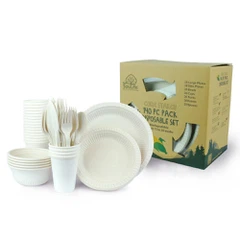
Can disposable bamboo cutlery be reused?
Oct 31, 2025
Leave a message
Can disposable bamboo cutlery be reused? This is a question that I, as a supplier of disposable bamboo cutlery, often encounter. In this blog post, I'll delve into this topic from multiple perspectives, including the material characteristics of bamboo cutlery, environmental considerations, and practical reuse scenarios.
Material Characteristics of Bamboo Cutlery
Bamboo is a remarkable natural material. It is strong, lightweight, and has a natural resistance to bacteria. These properties make bamboo an ideal choice for cutlery. When we talk about disposable bamboo cutlery, it's important to understand that the "disposable" label doesn't necessarily mean it can't be reused.
Disposable bamboo cutlery is typically made from high - quality bamboo that has been processed to ensure its safety for food contact. The manufacturing process usually involves cleaning, shaping, and sometimes a light treatment to enhance its durability. For example, our Bamboo Spoons Disposable are crafted with precision, using only the best parts of the bamboo. The smooth surface of the spoons not only provides a pleasant dining experience but also makes them relatively easy to clean.


However, bamboo is a natural material, and like all natural materials, it has its limitations. Over time, repeated use and exposure to moisture can cause the bamboo to warp, crack, or develop mold. This is especially true if the cutlery is not properly cared for.
Environmental Considerations
One of the main reasons people choose disposable bamboo cutlery is its environmental friendliness. Bamboo is a fast - growing renewable resource. It can be harvested in a sustainable manner, and its growth rate far exceeds that of many other trees used for wood products. When compared to plastic cutlery, which can take hundreds of years to decompose, bamboo cutlery is a much more sustainable option.
Our Bamboo Compostable Cutlery is designed to be compostable. This means that at the end of its life cycle, it can be returned to the earth, enriching the soil instead of polluting the environment. But what about reusing it? Reusing disposable bamboo cutlery can further reduce its environmental impact. By using the cutlery multiple times, we can decrease the demand for new production, which in turn saves resources and reduces waste.
On the other hand, if the cutlery is reused in an improper way, it may lead to a shorter overall lifespan and ultimately more waste. For instance, if the cutlery is not cleaned thoroughly and starts to smell or develop mold, people may be more likely to discard it earlier.
Practical Reuse Scenarios
In many cases, disposable bamboo cutlery can be reused without significant issues. For home use, it can be a great alternative to regular cutlery for casual meals. After each use, simply wash the cutlery with mild soap and water, then dry it thoroughly. Storing the cutlery in a dry place can help prevent mold growth.
For example, a set of Bamboo Cutlery Set Disposable can be used for a family's daily breakfasts. The spoons, forks, and knives can be washed and reused for several days or even weeks, depending on how well they are maintained.
In a commercial setting, such as a food truck or a small café, reusing disposable bamboo cutlery can also be feasible. However, it requires more careful management. The cutlery needs to be washed in a proper dishwasher with the right cleaning agents to ensure thorough sanitation. Additionally, there should be a system in place to monitor the condition of the cutlery and replace it when necessary.
Signs That Reuse Should Stop
While it's possible to reuse disposable bamboo cutlery, there are some signs that indicate it's time to stop. If the cutlery starts to show visible signs of wear, such as cracks, splinters, or significant discoloration, it should be discarded. Cracks can harbor bacteria, and splinters can be a safety hazard.
Another sign is the development of an unpleasant odor or the presence of mold. Even if the mold can be removed, it's a sign that the cutlery has been exposed to excessive moisture and may not be suitable for further use.
Tips for Reusing Disposable Bamboo Cutlery
To maximize the number of times you can reuse disposable bamboo cutlery, here are some tips:
- Cleaning: Always wash the cutlery immediately after use. Use a mild dish soap and warm water. Avoid using abrasive cleaners or scrubbers that can damage the bamboo surface.
- Drying: After washing, dry the cutlery thoroughly. You can let it air - dry on a rack or use a clean towel to pat it dry. Make sure there is no standing water left on the cutlery.
- Storage: Store the cutlery in a dry place. Avoid storing it in a damp or humid environment, as this can promote mold growth.
- Avoid Extreme Temperatures: Do not expose the bamboo cutlery to extreme heat or cold. This can cause the bamboo to expand or contract, leading to cracks.
Conclusion
In conclusion, disposable bamboo cutlery can indeed be reused in many situations. Its natural properties, combined with proper care, allow for multiple uses. Reusing disposable bamboo cutlery not only makes economic sense but also has significant environmental benefits.
However, it's important to be aware of the limitations of bamboo and to monitor the condition of the cutlery. When it shows signs of wear or damage, it's time to replace it.
If you're interested in purchasing high - quality disposable bamboo cutlery for your home, business, or event, please feel free to contact us. We offer a wide range of products, including Bamboo Spoons Disposable, Bamboo Cutlery Set Disposable, and Bamboo Compostable Cutlery. We're always ready to discuss your specific needs and provide the best solutions for your procurement.
References
- "The Properties of Bamboo as a Sustainable Material" - Journal of Sustainable Materials Research
- "Environmental Impact of Disposable Tableware" - Environmental Science Review
- "Best Practices for Reusing Natural Material Products" - Green Living Magazine
Send Inquiry