


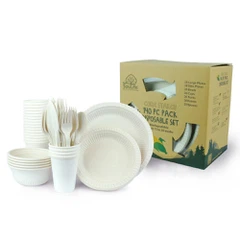
What is the temperature resistance of disposable cutlery packs?
Jan 21, 2026
Leave a message
Hey there! I'm a supplier of Disposable Cutlery Packs, and today I wanna chat about something super important: the temperature resistance of these handy packs.
First off, let's talk about why temperature resistance matters. Whether you're serving up a piping - hot bowl of soup or some ice - cold desserts, you need your disposable cutlery to hold up. No one wants a fork that melts when it touches hot food or a spoon that cracks under the cold.
Disposable cutlery packs come in different materials, and each has its own temperature - resistance characteristics.
Plastic Disposable Cutlery Packs
Most of the time, plastic is the go - to material for disposable cutlery. It's cheap, lightweight, and easy to produce. But when it comes to temperature, not all plastics are created equal.


Polypropylene (PP)
A lot of our Disposable Cutlery Packs are made from polypropylene. This plastic has a pretty good temperature resistance. It can handle temperatures up to about 120°C (248°F). That means it can withstand hot food straight out of the microwave or a steamy take - out container. For example, if you're serving hot noodles or a warm casserole, polypropylene cutlery won't lose its shape or start to deform.
However, if you try to use it with extremely hot items like molten cheese right from the oven (which can be well over 120°C), you might start to see some problems. The cutlery could warp, and in some cases, it might even release some chemicals. But for normal hot food temperatures, polypropylene is a great choice.
Polystyrene (PS)
Another common plastic used in disposable cutlery is polystyrene. It's often used for items like disposable forks and spoons in Wrapped Forks with Napkin packs. Polystyrene has a lower temperature resistance compared to polypropylene. It can usually handle temperatures up to around 90°C (194°F).
This makes it suitable for lukewarm food or cold items. If you're serving a salad or a cold sandwich, polystyrene cutlery will work just fine. But if you try to use it with hot coffee or a hot beverage in a disposable cup with a polystyrene lid, the lid might start to soften or melt. So, it's important to know the limitations of polystyrene cutlery when it comes to temperature.
Biodegradable Disposable Cutlery Packs
In recent years, there's been a growing demand for biodegradable disposable cutlery. These are made from materials like bamboo, cornstarch, and sugarcane.
Bamboo
Bamboo cutlery is a popular choice for eco - friendly Disposable Silverware Packets. It has a decent temperature resistance. It can handle hot food up to about 100°C (212°F). This is because bamboo is a natural material with a relatively high heat tolerance.
You can use bamboo cutlery for hot soups, stews, or even some hot Asian dishes. However, if you leave it in boiling water for a long time, the bamboo might start to lose its strength and become brittle. Also, it's important to note that bamboo cutlery is not as heat - resistant as some plastics, so you need to be a bit more careful when using it with very hot food.
Cornstarch and Sugarcane
Cutlery made from cornstarch and sugarcane is also biodegradable. These materials have a temperature resistance similar to some plastics. They can usually handle temperatures up to around 100 - 110°C (212 - 230°F). This makes them suitable for a wide range of hot and cold foods.
For example, you can use cornstarch - based cutlery for a hot burger or a cold milkshake. But like any material, they have their limits. If you expose them to extremely high temperatures for a long time, they might break down or lose their shape.
Metal - Lined Disposable Cutlery Packs
Some high - end disposable cutlery packs have a metal lining. This is usually done to increase the strength and temperature resistance of the cutlery.
Metal - lined plastic cutlery can handle much higher temperatures than regular plastic cutlery. It can withstand temperatures up to around 200°C (392°F) or even higher in some cases. This makes it suitable for very hot food, like grilled meats straight off the barbecue or hot pizza fresh from the oven.
However, metal - lined cutlery is more expensive to produce, so it's not as commonly used as other types of disposable cutlery. But if you're looking for something that can handle extreme temperatures, it's definitely an option.
Testing the Temperature Resistance
At our company, we conduct a series of tests to ensure that our disposable cutlery packs meet the required temperature resistance standards. We use specialized equipment to heat and cool the cutlery to different temperatures and then check for any signs of deformation, melting, or cracking.
For example, we might heat a plastic fork to 120°C for 10 minutes and see if it changes shape. If it does, we know that it might not be suitable for hot food applications. We also test the cutlery in cold environments to make sure it doesn't become brittle or break when used with ice - cold food.
Choosing the Right Disposable Cutlery Based on Temperature
When you're choosing disposable cutlery packs for your business or event, it's important to consider the temperature of the food you'll be serving.
If you're mainly serving cold food like salads, desserts, or cold drinks, polystyrene or biodegradable cutlery made from cornstarch or sugarcane might be a good choice. They're cost - effective and suitable for lower - temperature applications.
For hot food, especially if it's very hot (like hot soup or hot coffee), polypropylene or metal - lined cutlery is a better option. They can handle the heat without deforming or releasing harmful chemicals.
And if you're looking for an eco - friendly option for hot food, bamboo cutlery can be a great choice, as long as you're careful not to expose it to extreme heat for too long.
Conclusion
In conclusion, the temperature resistance of disposable cutlery packs depends on the material they're made from. Plastic, biodegradable materials, and metal - lined options all have different temperature limits. As a supplier, we make sure to provide high - quality cutlery that can handle a variety of temperatures.
If you're in the market for disposable cutlery packs and want to discuss your specific needs, whether it's for a restaurant, a catering service, or a special event, feel free to reach out. We're here to help you choose the right cutlery based on your food temperature requirements and budget. Let's work together to find the perfect disposable cutlery solution for you!
References
- Plastics Europe. "Properties of Polypropylene and Polystyrene."
- Journal of Biodegradable Materials. "Temperature Resistance of Biodegradable Cutlery."
- Food Packaging Association. "Testing Standards for Disposable Cutlery Temperature Resistance."
Send Inquiry