


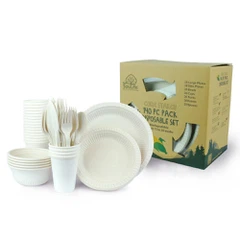
What is CPLA cutlery?
Dec 10, 2025
Leave a message
What is CPLA Cutlery?
(Industry Knowledge Page for International Buyers)
Table of Contents
- What Is CPLA Cutlery?
- How CPLA Is Made
- Why CPLA Cutlery Is Certified 100% Compostable
- Key Features of CPLA Cutlery
- Technical Parameters (Table)
- Why Businesses Prefer CPLA Over Traditional Plastic
- Not All "CPLA" Cutlery Is Truly Certified - What to Watch Out For
- Challenges in Using CPLA Cutlery
- The Future of Compostable Utensils
- FAQs
- Call to Action (CTA)
CPLA cutlery refers to utensils made from Crystalline Polylactic Acid, a plant-based bioplastic created through the crystallization of PLA. PLA originates from renewable crops such as corn starch or sugarcane, but once crystallized, it becomes stronger, more heat-resistant, and suitable for everyday food service.
In simple terms:
- PLA = plant-based material
- CPLA = upgraded PLA that can handle high heat, heavy foods, and commercial food-service environments.
Because of this, CPLA cutlery has become one of the most trusted eco-friendly alternatives for hotels, restaurants, fast-food chains, airlines, catering companies, chain stores, and wholesale partners.

The production process is surprisingly clean and simple:
(1). Renewable raw materials such as corn or sugarcane are processed into lactic acid.
(2). Lactic acid is polymerized into PLA.
(3). PLA undergoes crystallization, boosting its durability and heat resistance.
(4). The material is molded into cutlery with a smooth, matte finish.
Because the material comes from plants-not petroleum-it creates fewer carbon emissions and supports more sustainable resource use.
For CPLA cutlery to be labeled "compostable," it must meet strict international standards:
Key Certifications
| Certification | Meaning |
|---|---|
| ASTM D6400 (U.S.) | Ensures the material fully biodegrades in industrial composting facilities. |
| EN 13432 (EU) | Confirms compostability and no toxic residue. |
| BPI Certified | Validates industrial composting performance. |
| OK Compost Industrial | Guarantees the product breaks down under controlled commercial conditions. |
HOCSO's CPLA cutlery meets all major global certifications including EN13432, OK Compost Industrial, SGS (EC) No 1935/2024, (EU) No 10/2011, and FDA 21 CFR.
This ensures our cutlery returns to nature within months-not centuries like petroleum-based plastics.

1. 100% Compostable & Biodegradable
Breaks down into water, CO₂, and biomass without leaving toxic residue.
2. High Heat Resistance (Up to 85°C)
Unlike regular PLA, CPLA won't soften or bend when used with hot foods like soups or noodles.
3. Durable, Strong & Lightweight
Perfect for hotels, restaurants, and takeout businesses that need reliable utensils that won't crack easily.
4. Smooth Matte Appearance
Available in white, black, natural, or customized colors-looks modern and stylish for any dining setting.
5. Made from Renewable Resources
Supports sustainable sourcing and reduces reliance on fossil fuels.
| Item | Specification |
|---|---|
| Material | CPLA (Crystallized Polylactic Acid) |
| Raw Material Source | Corn starch / Sugarcane |
| Heat Resistance | Up to 85°C (185°F) |
| Colors | White / Black / Customized |
| Sizes | 6", 6.5", 7", 7.5", 8" |
| Types | Fork, Spoon, Knife, Stirrer, Set |
| Certification | EN13432, OK Compost Industrial, ASTM D6400, FDA 21 CFR |
| Packing Options | Bulk pack, single wrapped, paper wrapper |
| Shelf Life | 12–24 months (cool, dry environment) |
| Compostability | Industrial composting (90–180 days) |
Eco-Friendly Alternative
Traditional plastic can take up to 500 years to break down. CPLA returns to nature within months under industrial composting.
Better Heat Resistance & Strength
PLA is known to soften easily, but CPLA maintains structural stability.
Supports Global Sustainability Goals
Hotels, restaurants, airline catering, and franchise chains increasingly prefer certified compostable solutions to enhance brand responsibility.
The market is full of products labeled as CPLA-but not all are genuinely compostable.
Signs of unreliable CPLA products:
- No certification documents
- Inconsistent color or odor
- Melts easily with hot foods
- No traceability of raw materials
HOCSO guarantees full certification with batch traceability, giving global buyers peace of mind.
Even though CPLA is an excellent choice, a few challenges exist:
1. Composting Infrastructure
CPLA must be processed in industrial composting facilities. Some regions lack this system.
2. Slightly Higher Cost
Because it uses renewable materials and certified processes, CPLA is more expensive than traditional plastic.
3. Awareness Gap
Many consumers don't understand the difference between "biodegradable" and "compostable," leading to incorrect disposal.
Education and proper collection systems are key to maximizing its environmental benefits.
The global shift toward banning single-use plastics means compostable products will continue to grow rapidly.
Future developments may include:
- Home-compostable CPLA
- Higher heat resistance
- Lower production cost
- Wider global composting infrastructure
CPLA cutlery is not just a trend-it's a long-term solution for eco-friendly food service.
1. What is CPLA cutlery made from?
It's made from crystallized polylactic acid sourced from plants like corn starch or sugarcane.
2. Is CPLA truly compostable?
Yes. Certified CPLA cutlery decomposes in industrial composting systems within 90–180 days.
3. What temperature can CPLA withstand?
Up to 85°C (185°F) without bending or melting.
4. Is CPLA safe for food contact?
Yes. HOCSO's CPLA utensils are FDA & EU food-grade approved, BPA-free, and safe for hot or cold foods.
5. Can CPLA be recycled?
No. It should be composted, not recycled.
6. Why do hotels and restaurants switch to CPLA?
Because it supports sustainability goals, improves brand image, and reduces environmental impact.
7. Does CPLA have any smell or taste?
No. It's odorless, food-safe, and does not affect the taste of food.
Xiamen Hocso Packaging Products Co., Ltd. provides certified CPLA forks, spoons, knives, and customized cutlery sets for hotels, restaurants, fast-food shops, chain stores, importers, and wholesale partners worldwide.
👉 Contact us today for samples, bulk pricing, or OEM/ODM service.
We help your business switch to sustainable, certified compostable dining solutions with confidence.
Send Inquiry