


Are disposable utensil packs easy to clean (if reused)?
Jul 04, 2025
Leave a message
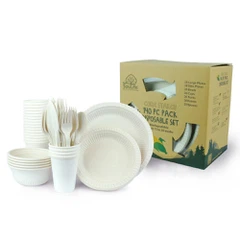
Hey there! As a supplier of Disposable Utensil Packs, I often get asked if these things are easy to clean if you reuse them. Well, let's dive right into it and see what's what.
First off, let's talk about why someone might even think about reusing disposable utensils. I get it. Saving money and being eco - friendly are both big deals these days. And hey, if you can make that disposable fork or spoon last a little longer, why not, right? But the question is, are they actually easy to clean?


Let's start with the materials. A lot of our Disposable Utensils Set are made from plastic. Plastic utensils are super common because they're cheap to produce and lightweight. But when it comes to cleaning, they can be a bit of a mixed bag.
On the plus side, plastic is generally non - porous. That means food and grease don't soak into it as easily as they might with other materials. So, a quick rinse under warm, soapy water can often do the trick for light use. You know, if you just used it to eat a piece of cake or something. The soap breaks down the grease, and you can wipe it clean with a sponge or a cloth.
However, if you've used the utensil to eat something really greasy, like a big, juicy burger, it can be a bit more of a challenge. The grease can leave a film on the plastic, and sometimes it takes a bit of scrubbing to get it all off. And let's be real, the more you scrub, the more likely you are to scratch the plastic surface. Once it's scratched, it becomes a lot easier for bacteria to hide in those little nooks and crannies, even after you think you've cleaned it.
Now, let's move on to our Disposable Bamboo Cutlery Set. Bamboo is a natural and renewable resource, which makes it a popular choice for eco - conscious folks. But cleaning bamboo utensils is a whole different ballgame.
Bamboo is porous. That means it can absorb water and food particles. If you leave a bamboo fork sitting in a sink full of water for too long, it can start to swell and warp. So, you've got to be really careful when cleaning it. You should avoid soaking it for extended periods. Instead, give it a gentle wash with a mild dish soap and a soft sponge right after use.
The good news is that bamboo has some natural antibacterial properties. So, as long as you clean it properly and let it dry completely, the chances of bacteria growing on it are relatively low. But here's the catch: if you use it to eat acidic foods, like tomatoes or citrus fruits, the acid can react with the bamboo and cause it to discolor or even break down over time. So, you've got to be extra cautious with what you use bamboo utensils for if you plan to reuse them.
Another popular option in our range is the Wrapped Forks with Napkin. These are often made of a combination of materials. The fork itself might be plastic, and the wrapper is usually some kind of paper or thin film.
The plastic part has the same cleaning issues we talked about earlier. But what about the wrapper? Well, if it's a paper wrapper, it's definitely not meant to be reused. Once it gets wet, it falls apart. And even if it's a thin film wrapper, it's not really designed to be cleaned. It's more of a single - use thing to keep the utensil clean before you use it.
Now, let's think about the practicality of reusing disposable utensils. Even if you can clean them, is it really worth the effort? You've got to consider the time and energy you're putting into cleaning them. And there's also the fact that disposable utensils are, well, disposable. They're not built to last through multiple washings. Over time, they'll start to wear out, lose their shape, and become less effective.
For example, a plastic spoon might start to bend or crack after a few washes. A bamboo fork might splinter. And when that happens, it's not only less useful, but it can also be a safety hazard. You don't want a piece of plastic or bamboo breaking off and ending up in your food.
But hey, if you're really set on reusing disposable utensils, there are some things you can do to make the cleaning process a bit easier. First, try to use them for lighter meals. That way, there's less mess to clean up. Second, clean them right away. The longer you wait, the harder it is to get the food off. And third, use the right cleaning tools. A soft sponge or a microfiber cloth is better than a harsh scrub brush, which can damage the utensils.
In conclusion, while it's possible to clean and reuse disposable utensil packs, it's not always easy. The type of material matters a lot. Plastic can be a bit easier to clean in some cases, but it has its own set of problems. Bamboo is eco - friendly but requires more careful handling. And the overall practicality of reusing them might not be worth it in the long run.
If you're a business owner looking for a reliable supply of high - quality disposable utensil packs, or if you're just someone who wants to stock up for a big event, I'd love to chat with you. We've got a wide range of options to suit your needs, and we can work together to find the best solution for you. Whether you're looking for the classic plastic set, the eco - friendly bamboo option, or something else entirely, we've got you covered. Reach out and let's start a conversation about your disposable utensil needs.
References
- "Food Contact Materials: A Review of Plastic and Natural Materials" - Journal of Food Science
- "The Environmental Impact of Disposable Utensils" - Environmental Research Letters
Send Inquiry