


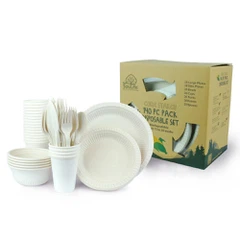
Is disposable cutlery recyclable
Sep 26, 2025
Leave a message
Is Disposable Cutlery Recyclable?
Content Menu
- Size and Material Challenges
- Food Contamination Issues
3. Recycling vs Composting: What's the Difference?
4. Comparison of Disposable Cutlery Materials
5. Scientific Insights & Real-World Case Studies
6. FAQs About Recycling Disposable Cutlery
7. What Buyers Should Know Before Choosing Eco-Friendly Cutlery
8. Conclusion: Moving Toward Sustainable Solutions
As sustainability becomes a priority for consumers and businesses alike, one pressing question keeps coming up: Is disposable cutlery recyclable?
At first glance, it feels logical to assume "yes"-plastic and plant-based utensils look recyclable. But the reality is more complex. Most disposable forks, spoons, and knives never make it through the recycling process. Understanding the materials, recycling barriers, and compostable alternatives is essential for making better purchasing decisions, whether you're an individual buyer, a restaurant owner, or a global distributor sourcing eco-friendly cutlery.
Despite displaying recycling symbols, disposable cutlery is rarely accepted in municipal recycling streams.
Size and Material Challenges
- Too small for recycling machines – Items like plastic forks and spoons often slip through sorting systems.
- Mixed plastics – Some utensils are made of blended materials that are difficult and expensive to separate.
Food Contamination Issues
- Leftover food residue contaminates recycling batches.
- Even technically recyclable plastics get rejected if not completely clean.
📊 EPA Data: In 2018, less than 9% of plastic waste in the U.S. was recycled, with disposable cutlery among the hardest-to-recycle items.

While traditional plastic cutlery rarely gets recycled, plant-based options like CPLA and cornstarch cutlery are designed for composting instead. Composting is not recycling-it breaks down materials into natural biomass under controlled conditions.
Without proper collection and industrial composting facilities, even "eco" products may end up in landfills.
| Material Type | Compostable? | Recyclable? | Notes |
|---|---|---|---|
| PLA (Polylactic Acid) | Yes (only in industrial composting) | No | Needs commercial facilities |
| CPLA (Crystallized PLA) | Yes (heat-resistant) | No | Not recyclable curbside |
| Cornstarch Blends | Partially | No | May include plastic additives |
| Traditional Plastic (PP, PS) | No | Rarely | Mostly landfill-bound |
✅ Key Takeaway: Choosing certified compostable disposable cutlery sets is better for the environment, but only if waste management infrastructure supports it.
Scientific Findings
A University of California, Berkeley study revealed:
- PLA utensils decompose in ~90 days in industrial composting.
- In landfills, they behave like plastic, showing no breakdown after 12 months.
- Recycling of PLA cutlery is limited due to insufficient sorting systems.
Case Study 1 – San Francisco Zero-Waste Policy
- Plastic cutlery banned since 2007.
- 60% of event organizers switched to certified compostable utensils.
- Composting rates increased by 30% in food-service waste streams.
Case Study 2 – Swedish Festival "Way Out West"
- Uses only plant-based disposable cutlery sets.
- Partnered with composting facilities to divert 2.5 tons of utensil waste from landfills annually.
- Customer satisfaction rose as sustainability became part of the brand identity.
Q1: Can I recycle plant-based cutlery at home?
No. CPLA and PLA cutlery require industrial composting, not home recycling bins.
Q2: Which is better-bamboo or plant-based cutlery?
Both are sustainable. Bamboo is reusable and often home-compostable, while plant-based disposable cutlery sets are single-use but designed for industrial composting.
Q3: Where can I source eco-friendly disposable cutlery wholesale?
Look for certified suppliers that provide ODM plant-based disposable cutlery sets for restaurants, catering, and events. Buying wholesale ensures cost efficiency and consistent supply.
- Check Certifications – Look for BPI, TÜV Austria, or DIN CERTCO compostability marks.
- Match the Use Case – Weddings, picnics, or catering events may require different levels of durability.
- Educate Users – Proper disposal signage at events improves composting success.
- Partner with Facilities – Collaborating with local composting centers ensures that eco cutlery fulfills its sustainable promise.
The honest answer is: most disposable cutlery is not recyclable. But with plant-based disposable cutlery sets, CPLA cutlery, and cornstarch alternatives, we have viable, eco-friendly options.
For businesses, choosing ODM-certified disposable cutlery suppliers helps align with global sustainability standards while meeting customer expectations. For consumers, the real impact comes from proper disposal-ensuring compostable products actually reach composting facilities.
At Xiamen Hocso Packaging Products Co., Ltd., we specialize in eco-friendly disposable cutlery sets for wholesale, distribution, and ODM partnerships. By working together, brands and buyers can reduce waste and move closer to zero-waste goals.
Send Inquiry