


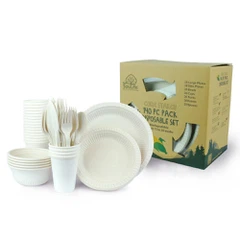
CPLA in Disposable Cutlery Packaging: A Perfect Blend Of Sustainability And Functionality
Jul 25, 2025
Leave a message
As global environmental awareness grows, traditional disposable plastic cutlery-notorious for its non-biodegradability and pollution-is being phased out. Biodegradable materials like polylactic acid (PLA) and its modified variant, crystallized PLA (CPLA), are emerging as game-changers in sustainable food packaging. Among them, CPLA stands out for its superior heat resistance, mechanical strength, and processing versatility, making it a cornerstone of green transformation in the catering industry.

1. From PLA to CPLA: A Technological Leap

Polylactic acid (PLA) is a bio-based plastic derived from renewable resources like corn starch or sugarcane. While eco-friendly and carbon-neutral, standard PLA suffers from low heat resistance (<60°C) and brittleness, limiting its use in hot food applications. To address this, crystallization modification technology is applied to create CPLA:
Process: By controlling PLA's crystallinity (40%–60%), its molecular chains align into an ordered structure, enhancing thermal and mechanical properties.
Performance Upgrade: CPLA withstands temperatures up to 120°C+, boasts 3–5× higher impact strength than PLA, and remains fully biodegradable (decomposing within 180 days under industrial composting conditions).
2. CPLA Disposable Cutlery Packs: Sustainable Solutions for Modern Dining

CPLA's balanced properties enable its use across a wide range of disposable cutlery packaging, including knives, forks, spoons, straws, containers, and lids. Its advantages shine in key scenarios:
1) High-Temperature Resilience for Safe Dining
Unlike PLA, which deforms under heat, CPLA maintains structural integrity at 100°C+, making it ideal for:
Hot Meal Containers: Perfect for takeout dishes like stir-fries and soups, preventing leaks or melting.
Coffee Cup Lids: Heat-resistant and leak-proof, ensuring safe transport of hot beverages.
2) Portability Meets Functionality
CPLA cutlery packs are lightweight (20%–30% lighter than plastic alternatives) yet durable, featuring ergonomic designs like reinforced handles and non-slip textures. Examples include:
On-the-Go Sets: Compact bundles of cutlery and straws in biodegradable paper sleeves, reducing single-use plastic waste.
Collapsible Containers: Thin-walled, foldable designs save space during storage and delivery.
3) Transparent Environmental Benefits
CPLA packaging often highlights its eco-credentials through labeling and design:
Degradation Certifications: Clear markings like "100% Biodegradable" or "Industrial Compost Certified" build consumer trust.
Brand Collaborations: Limited-edition packs co-branded with environmental NGOs promote sustainable lifestyles.
3. Market Adoption and Real-World Cases

1) Fast-Food Chains Leading the Charge
Global giants like McDonald's and Starbucks are replacing conventional plastics with CPLA:
Starbucks: Piloted CPLA straws and lids in select stores, cutting plastic use by over 90%.
McDonald's: Rolled out CPLA cutlery in European markets, aligning with its 2025 goal of 100% recyclable/biodegradable packaging.
2) Food Delivery Platforms Embrace Green Practices
Meituan and Ele.me (China's leading delivery apps) partner with suppliers to offer CPLA cutlery options, allowing users to opt out of disposable plastics or choose compostable alternatives.
3) Aviation and Fine Dining Applications
Lightweight and compliant with international sustainability standards, CPLA is used by airlines (e.g., Singapore Airlines, Lufthansa) for in-flight meals and by Michelin-starred restaurants seeking premium eco-friendly tableware.
4. Challenges and Future Directions

Despite its promise, CPLA faces hurdles:
Cost: Raw material prices are 2–3× higher than conventional plastics, necessitating economies of scale.
Consumer Awareness: Misconceptions about "biodegradability" persist (e.g., confusion between industrial vs. home composting).
Future innovations may include:
Enhanced Performance: Developing CPLA composites with heat resistance >150°C for broader use.
Cost Reduction: Advancing bio-based monomer synthesis to lower production expenses.
Circular Economy: Establishing CPLA recycling systems and chemical recycling methods for closed-loop resource use.
Conclusion
CPLA disposable cutlery packs are not just a regulatory compliance tool but a catalyst for sustainable consumption. As technology evolves and market education deepens, CPLA is poised to transition from a niche alternative to a mainstream choice, driving global decarbonization efforts. Every CPLA product chosen by consumers is a vote for a greener future-proving that sustainability can start right at the dining table.
Send Inquiry